- August 17, 2026
- admin
- 0
For decades, we’ve been told that healthy eating boils down to simple math: count your calories, track your macros, and keep portion sizes under control. Yet millions of people diligently hitting their calorie targets still find themselves battling stubborn brain fog, unexplained digestive flare-ups, and constant fatigue.
The missing piece isn’t just how much we eat—it’s how heavily processed our food has become.
Across the United States, grocery shoppers are looking past the “low-fat” and “sugar-free” claims on the front of the box to scrutinize the ingredient list on the back. This shift toward ingredient literacy and the NOVA food classification system is exposing how ultra-processed foods (UPFs) silently disrupt gut health and hormonal balance.
What Exactly Counts as an Ultra-Processed Food?
To understand UPFs, researchers rely on the NOVA classification system, which organizes food into four distinct tiers based on the extent of industrial processing:
- Unprocessed or Minimally Processed Foods: Real whole foods like fresh vegetables, whole fruits, raw nuts, plain milk, eggs, and raw meats.
- Processed Culinary Ingredients: Basic pantry staples used to cook at home, including cold-pressed olive oil, butter, vinegar, and salt.
- Processed Foods: Simple combinations of Group 1 and Group 2 foods, such as canned beans with salt, freshly baked artisanal bread, or cured meats.
- Ultra-Processed Foods (UPFs): Industrial formulations packed with ingredients you would never find in a home kitchen. These include chemical emulsifiers, synthetic flavor enhancers, modified starches, high-fructose corn syrup, and hydrogenated oils.
Typical UPFs include packaged snack pastries, energy bars loaded with isolated soy proteins, diet sodas, flavored yogurts, instant noodles, and reconstituted frozen meals.
How UPFs Break Down Your Gut Microbiome
Your digestive tract houses trillions of beneficial bacteria that regulate everything from digestion to immune defenses and serotonin production. When you eat, you aren’t just feeding yourself—you’re feeding your microbiome.
Ultra-processed foods affect this delicate ecosystem in two damaging ways:
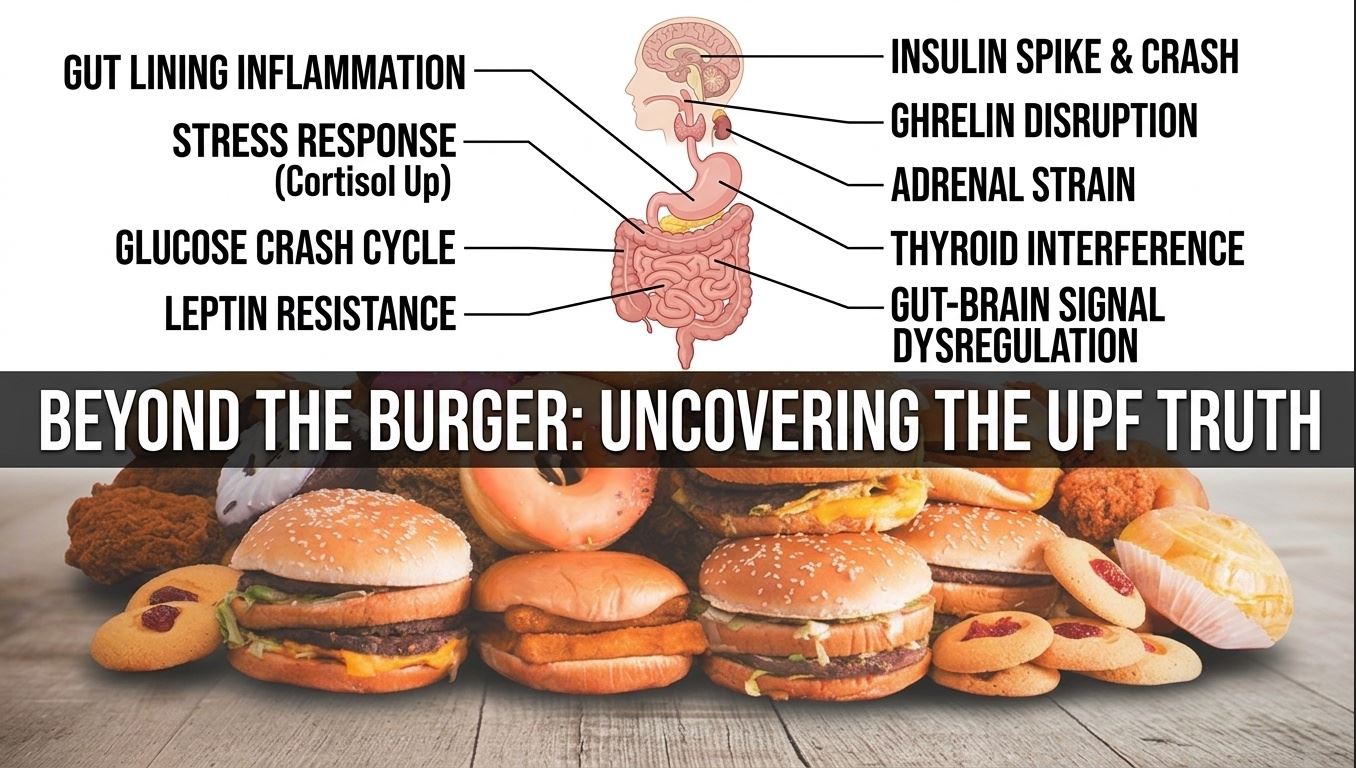
- Emulsifiers Strip the Protective Gut Mucosa: Common additives like polysorbate 80, carboxymethylcellulose (CMC), and carrageenan are added to make sauces smooth and prevent separation. However, these compounds act like mild detergents in your gut, thinning the protective mucous layer and allowing bacteria to trigger intestinal inflammation (often referred to as leaky gut).
- Starving Good Bacteria: UPFs are heavily refined, which strips out the intact prebiotic fibber your gut microbes need to thrive. Starved of real fuel, diversity drops, leading to issues like chronic bloating, irregular digestion, and microbiome dysbiosis.
The Silent Impact on Your Hormones
Your endocrine system relies on steady, clean nutrient signalling to manage hunger, mood, and stress. Ultra-processed foods disrupt this delicate balance:
- Insulin Spikes and Resistance: UPFs are engineered for rapid absorption, causing sharp spikes in blood sugar followed by steep crashes. Over time, these daily glucose rollercoasters strain the pancreas, driving insulin resistance and stubborn visceral fat accumulation.
- Leptin and Ghrelin Disruption: UPFs are designed with a hyper-palatable ratio of refined fats, sugars, and salts that bypasses natural fullness signals. They suppress leptin (the satiety hormone) and elevate ghrelin (the hunger hormone), making your brain crave more food even after eating a full meal.
- Packaging and Endocrine Disruptors: The problem isn’t limited to ingredients. Many UPFs are processed through industrial piping and packaged in plastic containers lined with phthalates and bisphenols. Heating or storing shelf-stable food in these plastics can leach microplastics and endocrine-disrupting chemicals directly into your diet, interfering with thyroid function and reproductive hormones.
4 Practical Steps to Cut Down on UPFs
Transitioning away from ultra-processed products doesn’t mean you have to cook every meal from scratch or adopt an all-or-nothing mindset. Small, consistent swaps make a massive difference:
- Follow the 5-Ingredient Rule: When buying packaged foods, look for labels with fewer than five recognizable, whole-food ingredients.
- Watch for “Kitchen Chemistry” Additives: If you spot ingredients like maltodextrin, mono- and diglycerides, artificial colorings, or bleached flours, leave it on the shelf.
- Upgrade Your Cooking Oils: Replace refined industrial seed oils with stable, unrefined choices like extra-virgin olive oil, avocado oil, or grass-fed butter.
- Swap Plastic for Glass and Stainless Steel: Store leftovers in glass containers and avoid microwaving food inside plastic tubs or film wraps.
Building a Healthier Relationship with Real Food
Improving your metabolic health isn’t about restriction; it’s about giving your body real, recognizable nutrients that work in harmony with your biology. By prioritizing whole foods and building ingredient literacy, you calm systemic inflammation, restore digestive comfort, and give your hormones the steady foundation they need to thrive.