- August 18, 2026
- admin
- 0
For generations, the standard measure of longevity was simple: reach a ripe old age. But today, the conversation around aging has fundamentally shifted. Most people aren’t just asking, “How long will I live?”—they’re asking, “How well will I live those years?”
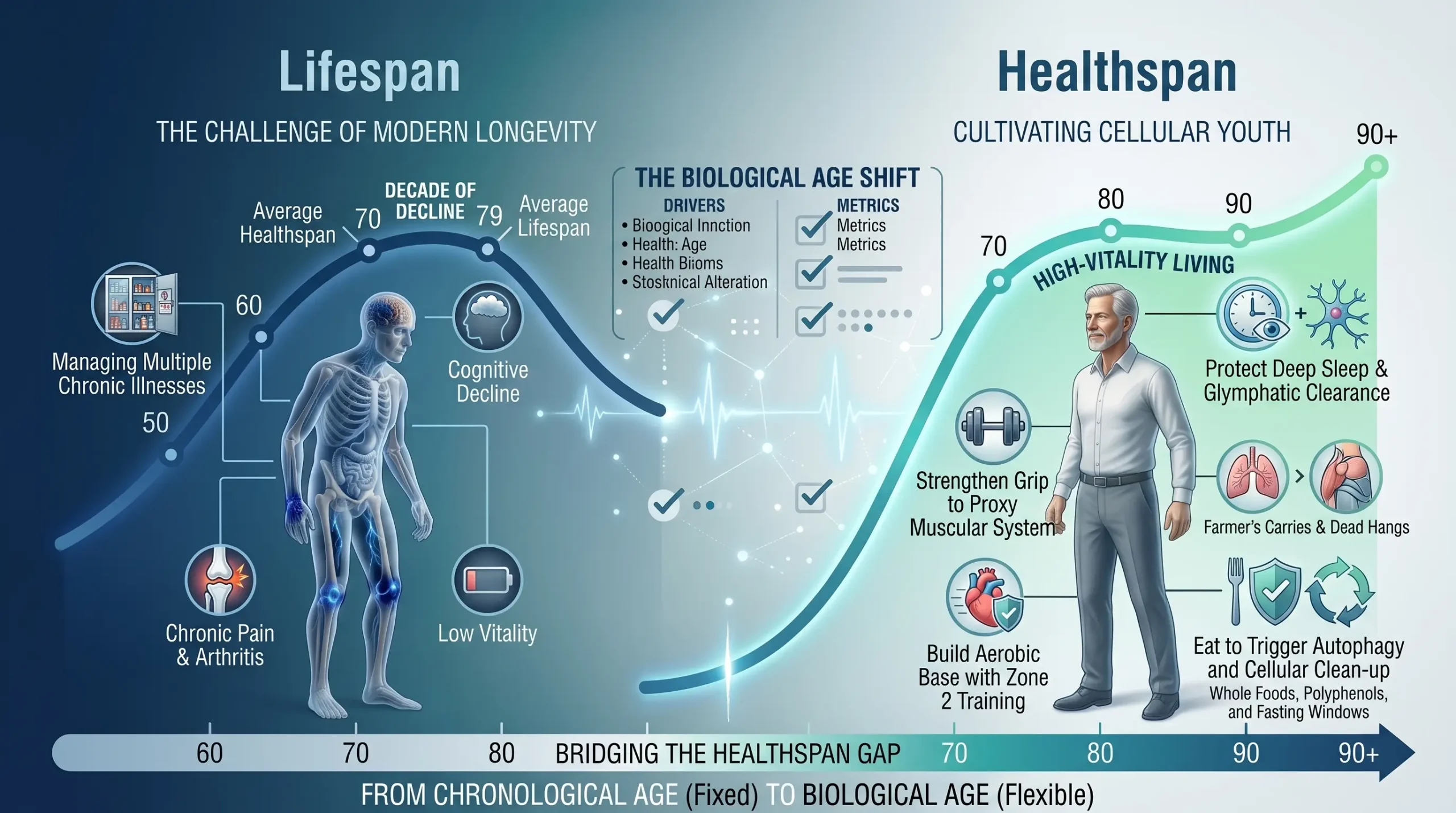
That distinction is the difference between lifespan (the total number of years you live) and healthspan (the years you live free from chronic disease, disability, and cognitive decline). In the United States, modern medicine has successfully extended average lifespans, but the average healthspan hasn’t kept up. Many Americans spend their final decade managing multiple chronic illnesses, joint pain, or low mobility.
The good news? Your chronological age (the number on your driver’s license) is fixed, but your biological age (the actual functional health of your cells and organs) is remarkably flexible.
What Actually Drives Biological Aging?
At the cellular level, biological aging is driven by several key biological processes:
- Cellular Senescence: Over time, damaged cells stop dividing but refuse to die. These “zombie cells” linger, secreting inflammatory molecules that damage surrounding healthy tissue.
- Mitochondrial Decline: Mitochondria are your cells’ energy engines. When they become sluggish or damaged, tissues lose their ability to repair and regenerate efficiently.
- Epigenetic Wear and Tear: Environmental stress, poor sleep, and nutrient-poor diets alter your DNA methylation patterns—essentially turning off protective longevity genes and accelerating cellular wear.
By addressing these root drivers through targeted lifestyle shifts, you can directly influence your biological clock.
4 Science-Backed Daily Habits to Lower Your Biological Age
You don’t need a multi-million-dollar biohacking laboratory to slow down cellular aging. Grounded, consistent daily habits deliver the greatest return on investment:
1.Build an Aerobic Base with Zone 2 Training
High-intensity interval training (HIIT) gets plenty of attention, but low-intensity Zone 2 cardio is the secret weapon for mitochondrial longevity. Zone 2 refers to a pace where you are moving steadily but can still maintain a full conversation without gasping for breath (around 60% to 70% of your maximum heart rate).
- Why it works: Zone 2 exercise stimulates mitochondrial biogenesis—clearing out old, damaged cellular engines and multiplying healthy, efficient ones.
- How to do it: Aim for 150 to 180 minutes per week spread across 3 to 4 sessions of brisk incline walking, cycling, or light rowing.
2. Strengthen Your Grip to Protect Your Neuromuscular Health
Grip strength has become one of the most heavily researched biomarkers in modern longevity science. Major epidemiological studies show that a measurable decline in grip strength correlates with higher risks of cardiovascular disease, mobility loss, and all-cause mortality.
- Why it works: Grip strength isn’t just about hand power; it serves as a reliable proxy for whole-body muscle mass, tendon elasticity, and nervous system integrity.
- How to do it: Incorporate functional grip exercises 2 to 3 times a week:
- Farmer’s Carries: Walk with a heavy pair of dumbbells or kettlebells by your sides for 30–60 seconds.
- Dead Hangs: Hang from a pull-up bar for 20–45 seconds to decompress your spine and challenge wrist flexors.
3. Eat to Trigger Autophagy and Cellular Clean-up
What and when you eat signals your cells whether to grow or to clean house. Constantly grazing throughout the day keeps insulin and growth pathways (like mTOR) elevated, preventing cells from engaging in autophagy—the internal recycling process that clears out damaged proteins and senescent cellular debris.
- Prioritize Whole, Polyphenol-Rich Foods: Emphasize leafy greens, dark berries, extra-virgin olive oil, and fermented foods that nourish the gut microbiome and reduce systemic inflammation.
- Give Digestion a Rest: Try an overnight 12-to-14-hour fasting window (e.g., finishing dinner by 7 PM and eating breakfast at 8 or 9 AM). This provides enough downtime for metabolic pathways to initiate basic cellular repair.
4. Protect Your Deep Sleep Architecture
During deep, slow-wave sleep, your brain’s glymphatic system clears out metabolic waste and amyloid plaques, while your endocrine system releases growth hormone to repair muscle and bone tissue.
- Anchor Your Circadian Clock: Step outside into natural morning sunlight within 30 minutes of waking to set your melatonin rhythm for the night.
- Cool Down Your Bedroom: Keep your sleep environment between 65°F and 68°F (18°C–20°C) to facilitate the core body temperature drop required for deep sleep stages.
How to Track Your Biological Progress
If you want objective data on how your daily habits are moving the needle, consider these accessible metrics:
Longevity Metric | How to Test | What It Tells You |
Grip Strength | Handheld dynamometer (or timed dead hangs) | Overall functional muscle mass & neuromuscular resilience. |
VO2 Max | Smartwatch estimate or clinical treadmill test | Cardiorespiratory fitness and all-cause mortality risk. |
Metabolic Blood Panel | Fasting insulin, HbA1c, and hs-CRP tests | Blood sugar stability and chronic low-grade inflammation. |
Epigenetic DNA Clocks | At-home saliva/blood methylation test kits | An estimate of cellular rate of aging vs. chronological age. |
The Takeaway: Invest in Your Future Self
Extending your healthspan isn’t about chasing immortality or following extreme, unsustainable diets. It’s about preserving physical strength, clear cognitive function, and daily vitality so that your future years are as active and fulfilling as your current ones. Pick one habit—whether that’s a 30-minute Zone 2 walk or a set of farmer’s carries—and start building your longevity foundation today.