- September 2, 2026
- admin
- 0
Why Is My Cat Vomiting? 4 Urgent Signs to Visit the Vet
Hearing that familiar, rhythmic retching sound in the middle of the night is something almost every cat parent dreads. You rush out of bed hoping to direct them away from the rug, but you’re left wondering: Why is my cat vomiting, and should I be worried?
While an occasional hairball isn’t usually cause for alarm, frequent or sudden vomiting can signal anything from simple dietary indiscretion to serious underlying medical issues. Understanding the difference between a harmless upset stomach and a veterinary emergency is essential for your pet’s well-being.
Cat Vomiting vs. Regurgitation: What’s the Difference?
Before diving into the causes, it’s helpful to understand whether your cat is truly vomiting or simply regurgitating.
- Vomiting: This is an active, muscular process. Your cat’s abdomen will heave noticeably, and they usually drool, swallow repeatedly, or vocalize beforehand. The expelled fluid is often partially digested food mixed with clear, yellow (bile), or frothy liquid.
- Regurgitation: This is a passive process where food or water comes back up effortlessly shortly after swallowing. The expelled material typically looks like undigested kibble formed into a tight, tube-like shape resembling the esophagus.
Common Causes of Cat Vomiting
A cat’s digestive tract is sensitive. According to broader veterinary studies on overall cat health, feline gastrointestinal distress stems from both benign habits and severe systemic conditions.
- Hairballs (Trichobezoars)
Cats spend up to a third of their waking hours grooming. The tiny, hook-like structures on their tongues catch loose hair, which is swallowed and normally passes through the stool. When hair accumulates in the stomach, your cat may cough up a cylindrical clump wrapped in stomach juices.
- Eating Too Fast (“Scarf and Barf”)
If your cat treats mealtime like an Olympic sport, they swallow excess air along with unchewed kibble. The dry food quickly swells in the stomach, triggering an immediate reflex to vomit undigested food minutes after eating.
- Dietary Changes and Food Intolerances
Abruptly switching your cat’s food can irritate the lining of the stomach and intestines. Additionally, cats can develop allergies or intolerances to common protein sources like chicken, beef, or dairy.
- Ingesting Foreign Objects
Cats love to play with yarn, hair ties, string, ribbons, and rubber bands. If swallowed, these can cause life-threatening linear gastrointestinal blockages that prevent anything from passing through the digestive tract.
- Toxic Ingestion
Many everyday household items are toxic to felines, including:
- Plants: Lilies (extremely toxic, causing rapid kidney failure), pothos, and philodendrons.
- Human Foods: Onions, garlic, chocolate, and caffeine.
- Chemicals: Essential oils, pest control chemicals, and household cleaners.
- Underlying Systemic Illnesses
In middle-aged and senior cats, chronic vomiting is often a secondary symptom of a broader medical condition:
- Inflammatory Bowel Disease (IBD)
- Chronic Kidney Disease (CKD)
- Hyperthyroidism
- Pancreatitis
- Internal Parasites (worms)
When Is Cat Vomiting An Emergency?
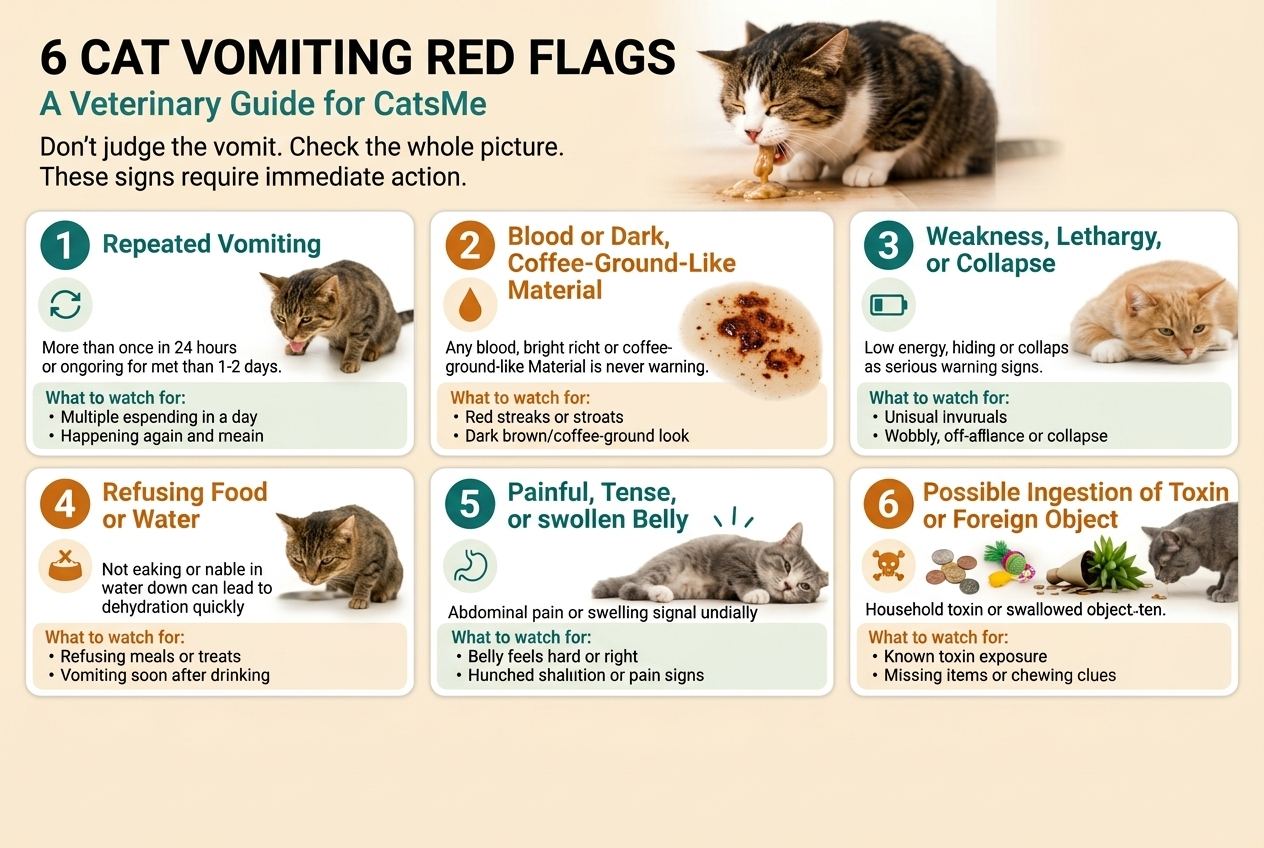
An isolated episode in an otherwise bright, playful cat can often be monitored for 12–24 hours. However, certain “red flag” symptoms require immediate veterinary attention.
|
Safe to Monitor (Short-Term) |
Immediate Vet Visit Required |
|
Single episode with a hairball |
Multiple vomiting episodes within 24 hours |
|
Cat remains playful and alert |
Lethargy, weakness, or hiding |
|
Eating and drinking normally afterward |
Blood in vomit (looks bright red or like dark coffee grounds) |
|
Normal stool in the litter box |
Inability to keep water down |
|
No known exposure to toxins/strings |
Suspicion of ingesting lilies, string, or toxic chemicals |
How to Help a Vomiting Cat at Home
Why is my cat vomiting : If your cat vomited once, is acting completely normal, and shows no red flags, here are practical steps you can take:
- Rest the Stomach: Remove food for 2 to 4 hours to let their stomach settle. Avoid withholding water unless your vet explicitly tells you to do so.
- Introduce a Bland Diet: Offer a small amount of plain, boiled shredded chicken breast (no seasoning or skin) or veterinary gastrointestinal canned food.
- Use Slow-Feeder Bowls: If your cat eats too fast, puzzle feeders or lick mats force them to eat smaller mouthfuls.
- Groom Regularly: Brushing your cat daily drastically reduces the volume of hair they ingest, keeping hairballs to a minimum.
- Never Give Human Medication: Never administer Pepto-Bismol, aspirin, or ibuprofen to a cat. These are toxic and can be fatal to felines.
What to Expect at the Vet (Why is my cat vomiting)
When at-home monitoring isn’t enough, your veterinarian will work to find the root cause through targeted diagnostics:
- Physical Exam: Checking for dehydration, fever, abdominal tenderness, or palpable intestinal masses.
- Bloodwork & Urinalysis: Evaluating organ function (kidneys, liver, thyroid) and checking for infection or electrolyte imbalances.
- X-rays / Ultrasound: Looking for internal blockages, swallowed strings, foreign objects, or intestinal wall thickening.
- Targeted Treatment: Administering anti-nausea medications (such as maropitant/Cerenia), subcutaneous fluids for dehydration, and specific therapies tailored to the diagnosed cause.
The Bottom Line: While an occasional regurgitated hairball is part of life with a cat, frequent vomiting is never normal. Trust your instincts—if your cat seems uncomfortable, lethargic, or cannot keep meals down, reach out to your local vet right away. Why is my cat vomiting.