- January 22, 2026
- admin
- 0
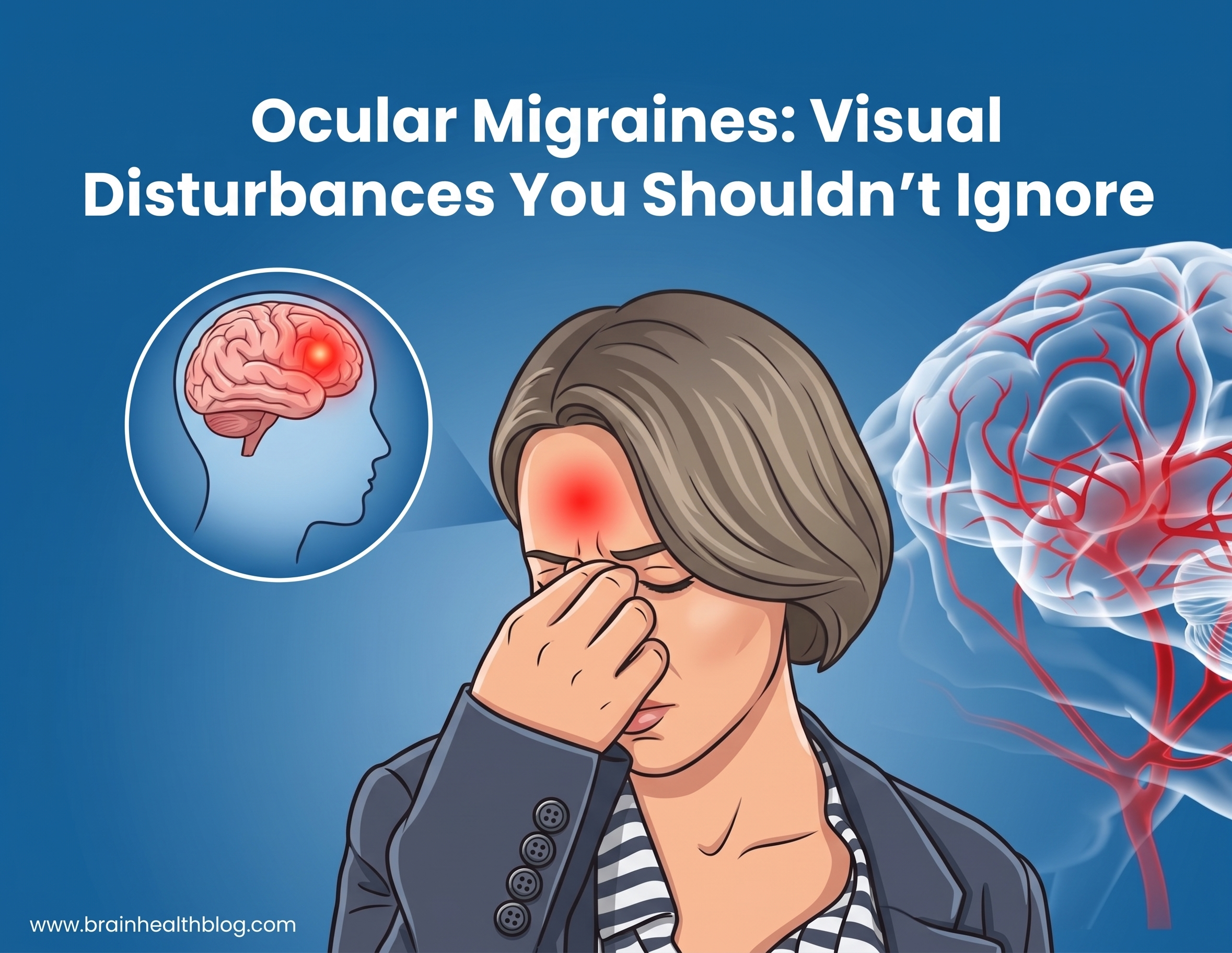
Ocular Migraine:
Causes, Symptoms, and 4 Powerful Ways to Manage Visual Disturbances
Few experiences are as alarming as a sudden, dramatic change in your vision. You might be reading a document, driving home, or preparing dinner when shimmering zigzag lines, blind spots, or flashing lights suddenly obscure your line of sight. For many people, this frightening visual disturbance is their first encounter with an ocular migraine.
While sudden changes in vision should always be evaluated by a healthcare professional, an ocular migraine is generally a temporary, non-destructive neurological event. Understanding what triggers these episodes, how they differ from other headache disorders, and how to manage them can provide immense peace of mind.
What Exactly Is an Ocular Migraine?
The term ocular migraine is often used casually, but medically it can refer to two distinct conditions: a migraine with visual aura (which affects both eyes) and a true retinal migraine (which affects only one eye).
In everyday conversation, most people diagnosed with an ocular migraine are experiencing a visual aura associated with migraine activity. During these episodes, blood vessels and nerve pathways in the visual cortex of the brain experience temporary shifts in electrical activity. This wave of activity, known scientifically as cortical spreading depression, produces vivid optical distortions that typically resolve on their own within 20 to 60 minutes.
Common Symptoms to Watch For
The symptoms of an ocular migraine can vary significantly from person to person, but they generally share specific, recognizable patterns:
- Scintillating Scotoma: A shimmering or flickering blind spot near the center of vision that gradually expands outward in jagged, geometric lines.
- Fortification Spectra: Jagged, zigzagging visual patterns that resemble the outline of a medieval fortress.
- Temporary Blind Spots: Small patches of blurry vision or complete visual gaps that drift across your field of view.
- Kaleidoscopic or Pixelated Vision: Images appearing fractured, doubled, or shimmering as if viewed through cracked glass or moving water.
- With or Without Headache: While some people develop a throbbing headache following visual disturbances, many experience an ocular migraine without any accompanying head pain (known as an acephalgic or “silent” migraine).
Ocular Migraine vs. Retinal Migraine: The Crucial Difference
It is vital to distinguish between a standard ocular migraine (migraine aura) and a retinal migraine, as their clinical implications are different:
|
Feature |
Standard Ocular Migraine (Visual Aura) |
Retinal Migraine |
|
Eyes Affected |
Both eyes simultaneously (even if you close one eye) |
Strictly one eye only (monocular) |
|
Origin of Issue |
Visual cortex in the brain |
Blood vessel spasms in the retina |
|
Visual Effect |
Shimmering lights, zigzag lines, colorful patterns |
Blackouts, significant dimming, or temporary blindness |
|
Medical Urgency |
Common and generally benign |
Rare; requires urgent ophthalmic evaluation |
Pro Tip: To tell the difference during an episode, cover one eye with your hand. If the visual disturbance remains present in both eyes, it is almost certainly a visual aura rather than a localized retinal issue.
What Triggers an Ocular Migraine?
While the precise underlying mechanism involves genetic and vascular factors, most episodes are set off by specific environmental or physiological triggers. Identifying your personal triggers is one of the most effective steps in preventing future episodes:
- Prolonged Screen Time & Blue Light: Hours of uninterrupted glare from monitors, smartphones, and harsh fluorescent office lights strain the visual processing centers of the brain.
- Physical and Emotional Stress: High levels of chronic stress or the sudden “let-down” period after a stressful week frequently precipitates an ocular migraine.
- Dehydration and Skipped Meals: Blood sugar crashes and electrolyte imbalances act as strong neural irritants.
- Hormonal Fluctuations: Shifts in estrogen levels during menstrual cycles, pregnancy, or menopause are common triggers.
- Dietary Culprits: Aged cheeses, artificial sweeteners (like aspartame), monosodium glutamate (MSG), nitrates in processed meats, and excessive caffeine intake or withdrawal.
- Environmental Stimuli: Flickering fluorescent tubes, driving through dappled sunlight, intense reflections on water, or strong chemical odors.
How to Manage an Episode When It Happens
When an ocular migraine strikes, taking immediate steps can reduce discomfort and prevent a secondary headache from developing:
1. Stop What You Are Doing Safely
If you are driving, operating machinery, or working with sharp tools, pull over or step away immediately. Visual disturbances compromise depth perception and peripheral awareness.
2. Move to a Low-Stimulation Space
Find a quiet, dimly lit room. Close your eyes and avoid looking at screens, phones, or television displays until the visual distortions have completely cleared.
3. Hydrate and Apply Cold Therapy
Drink a large glass of cool water. Placing an ice pack or a chilled washcloth across your forehead and over your closed eyes helps soothe dilated cranial blood vessels.
4. Consider Over-the-Counter Options
If your visual aura is typically followed by a throbbing headache, taking an anti-inflammatory pain reliever (such as ibuprofen, naproxen, or acetaminophen) at the very onset of visual symptoms can help blunt the subsequent pain.
Long-Term Prevention and Lifestyle Strategies
Preventing an ocular migraine requires consistent habits that stabilize your nervous system and reduce sensory overload:
- Follow the 20-20-20 Rule: Every 20 minutes of digital screen work, look at an object at least 20 feet away for 20 seconds to ease eye strain.
- Prioritize Sleep Hygiene: Maintain a consistent sleep schedule, aiming for 7 to 9 hours of restorative rest every night.
- Keep a Symptom Journal: Log the date, duration, foods eaten, sleep quality, and stress levels whenever an episode occurs to pinpoint hidden triggers.
- Incorporate Gentle Movement: Regular aerobic exercise, such as brisk walking, swimming, or cycling, improves cardiovascular circulation and lowers overall stress hormones.
When Should You See a Doctor?
While a typical ocular migraine is harmless and resolves rapidly, any sudden visual disturbance warrants medical confirmation to rule out more serious ophthalmic or neurological conditions, such as retinal detachment, transient ischemic attacks (TIAs), or stroke.
Seek immediate medical attention if:
- The visual symptoms last longer than 60 minutes.
- You experience sudden, painless loss of vision in only one eye.
- The episode is accompanied by weakness, numbness, slurred speech, or confusion.
- You experience a sudden, explosive headache (“thunderclap headache”) unlike anything you have had before.
Living with an occasional ocular migraine can be unsettling, but with proper lifestyle adjustments, trigger avoidance, and medical guidance, you can successfully minimize their impact on your daily life.